
Prologue
Earth Remembers. Fire Reveals.
Jianshui Purple Pottery
Shaped by hand, water, pressure, fire, and time.
Enter the making of an Oriental vessel.
Explore Purple PotteryScroll to reveal


Nothing between earth and touch.
Unglazed by choice
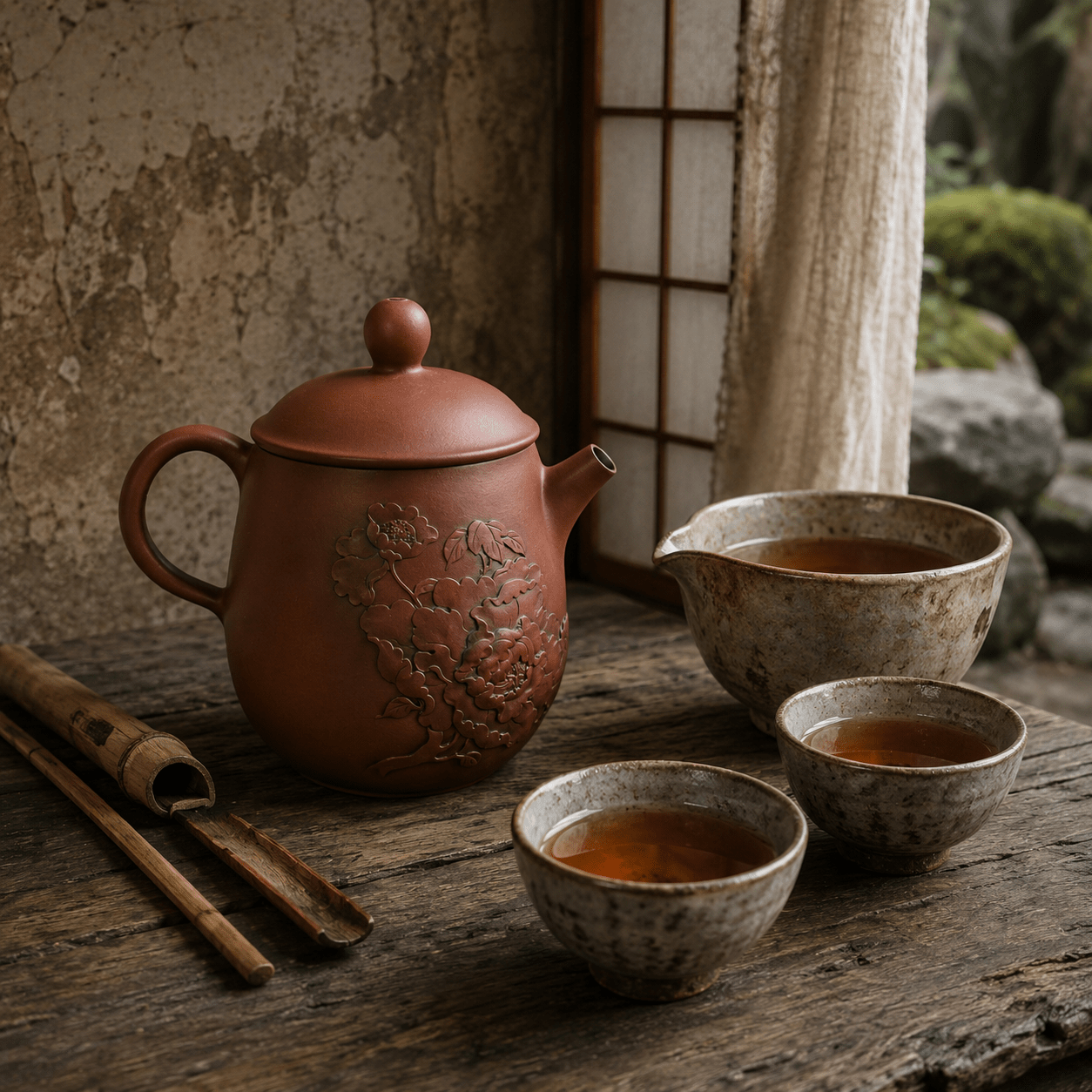
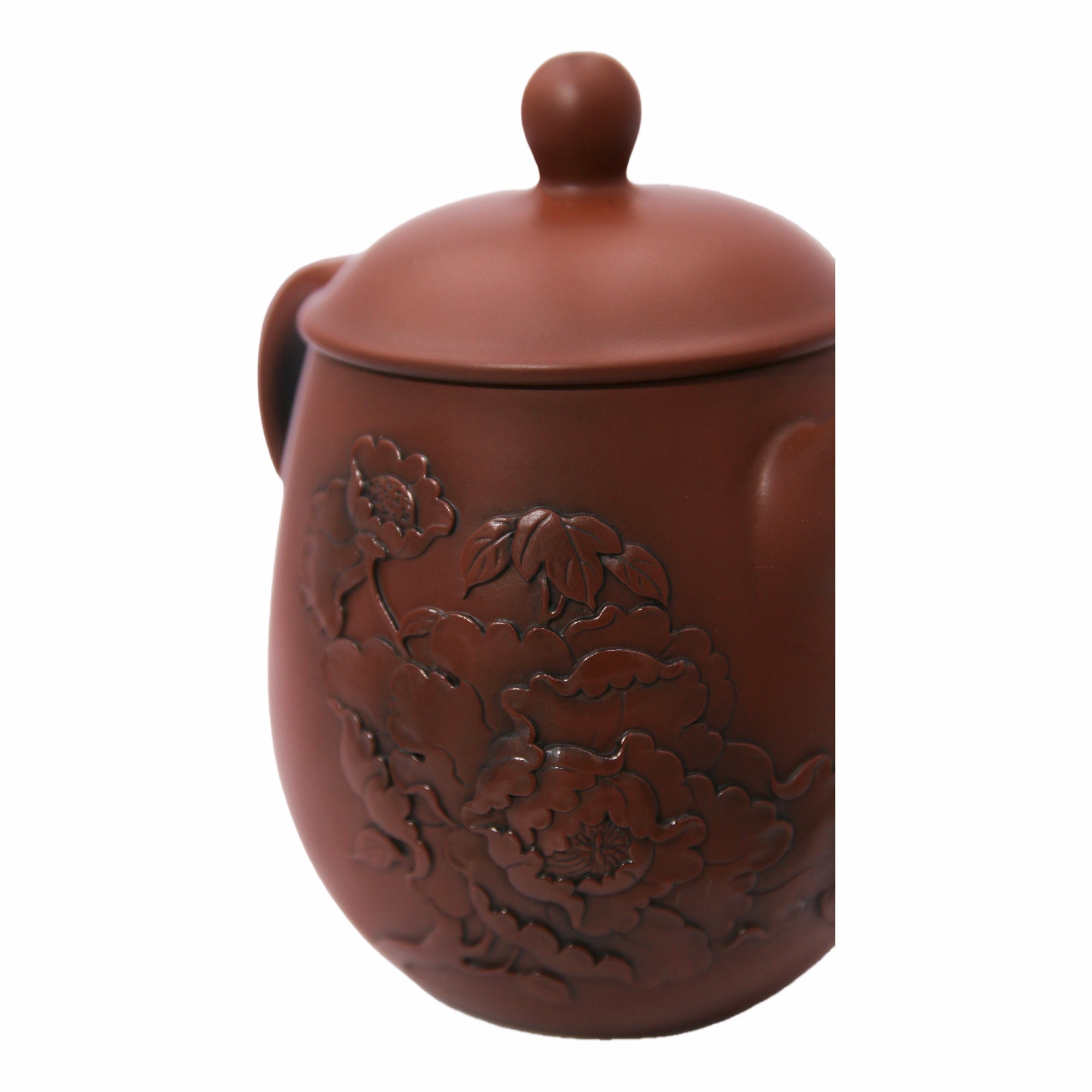
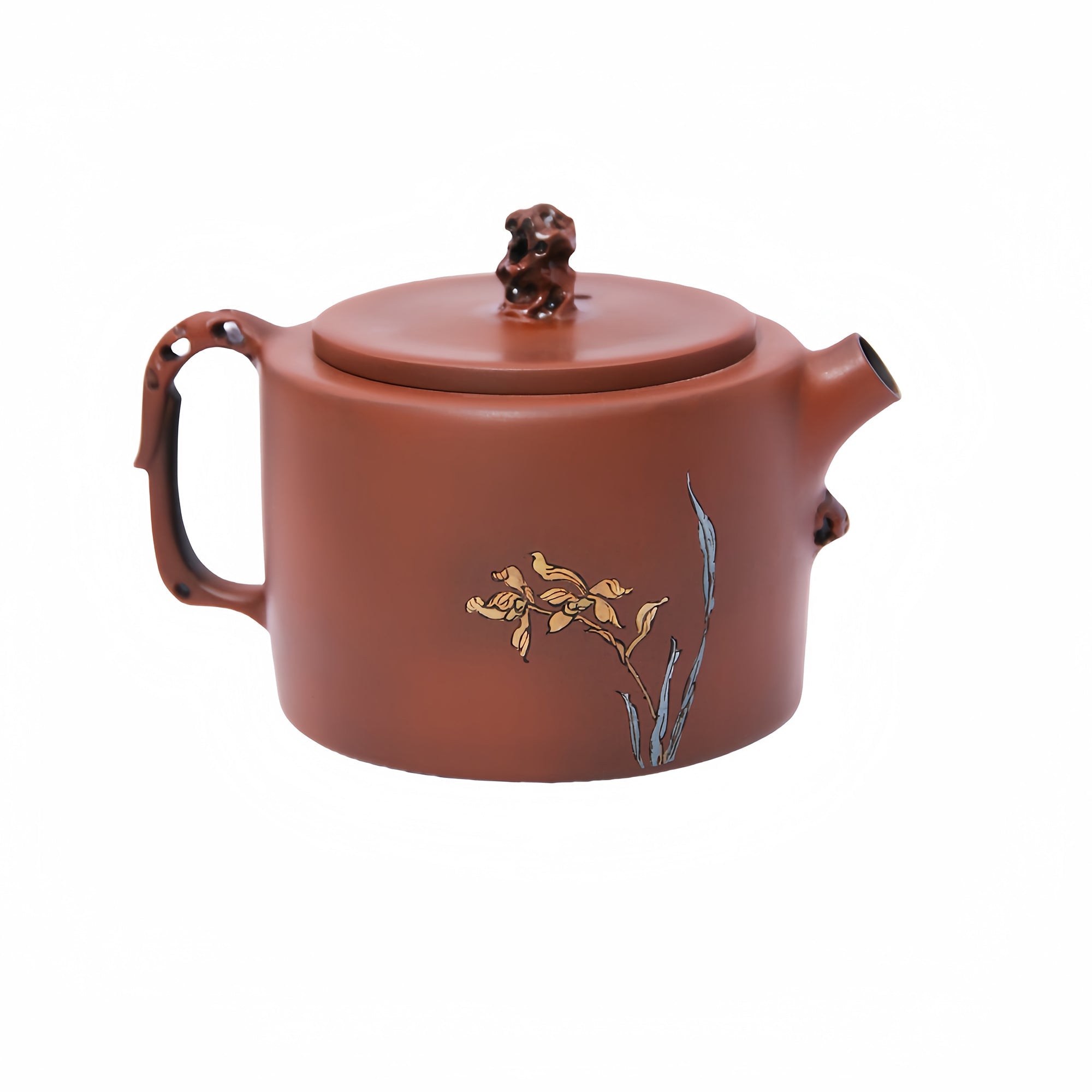
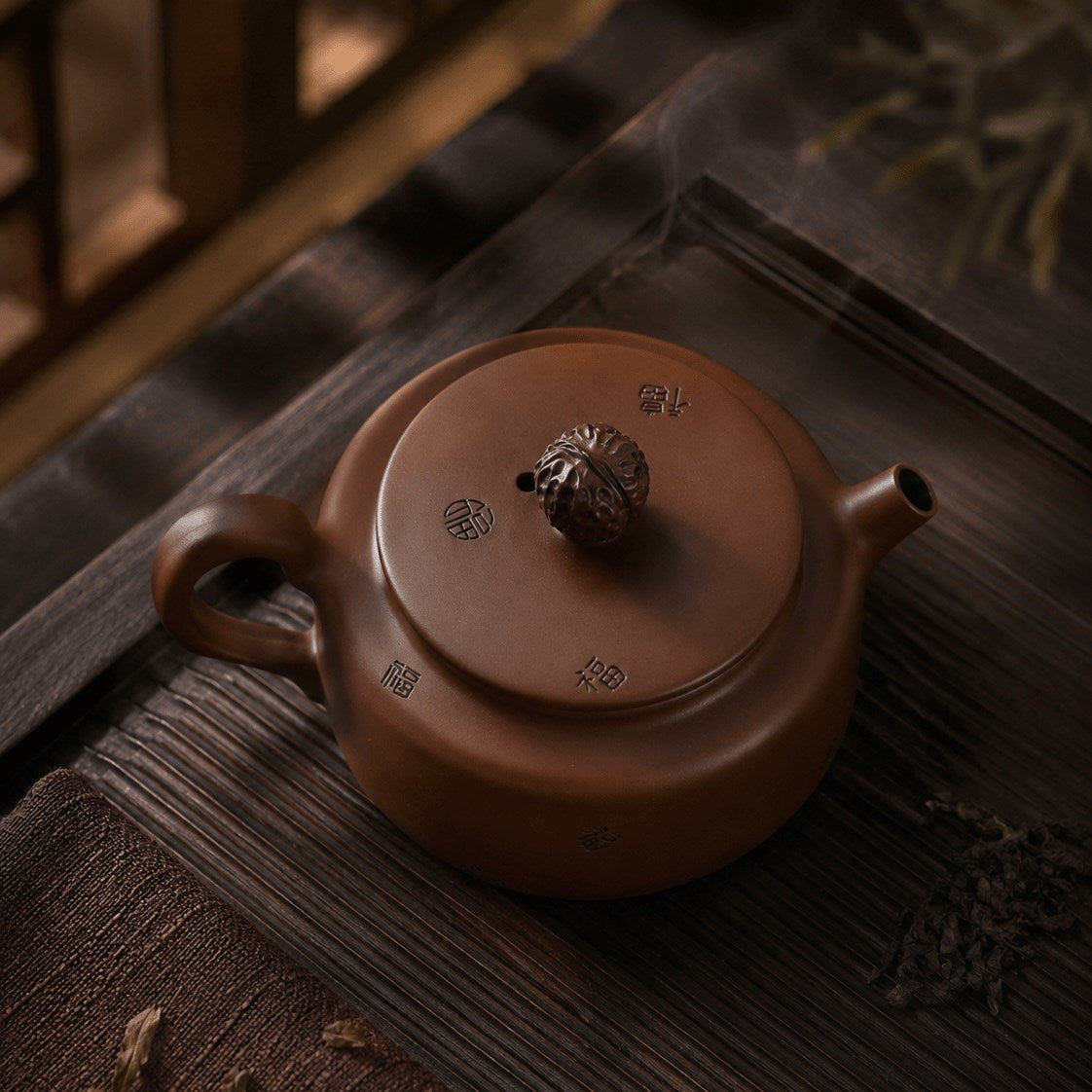
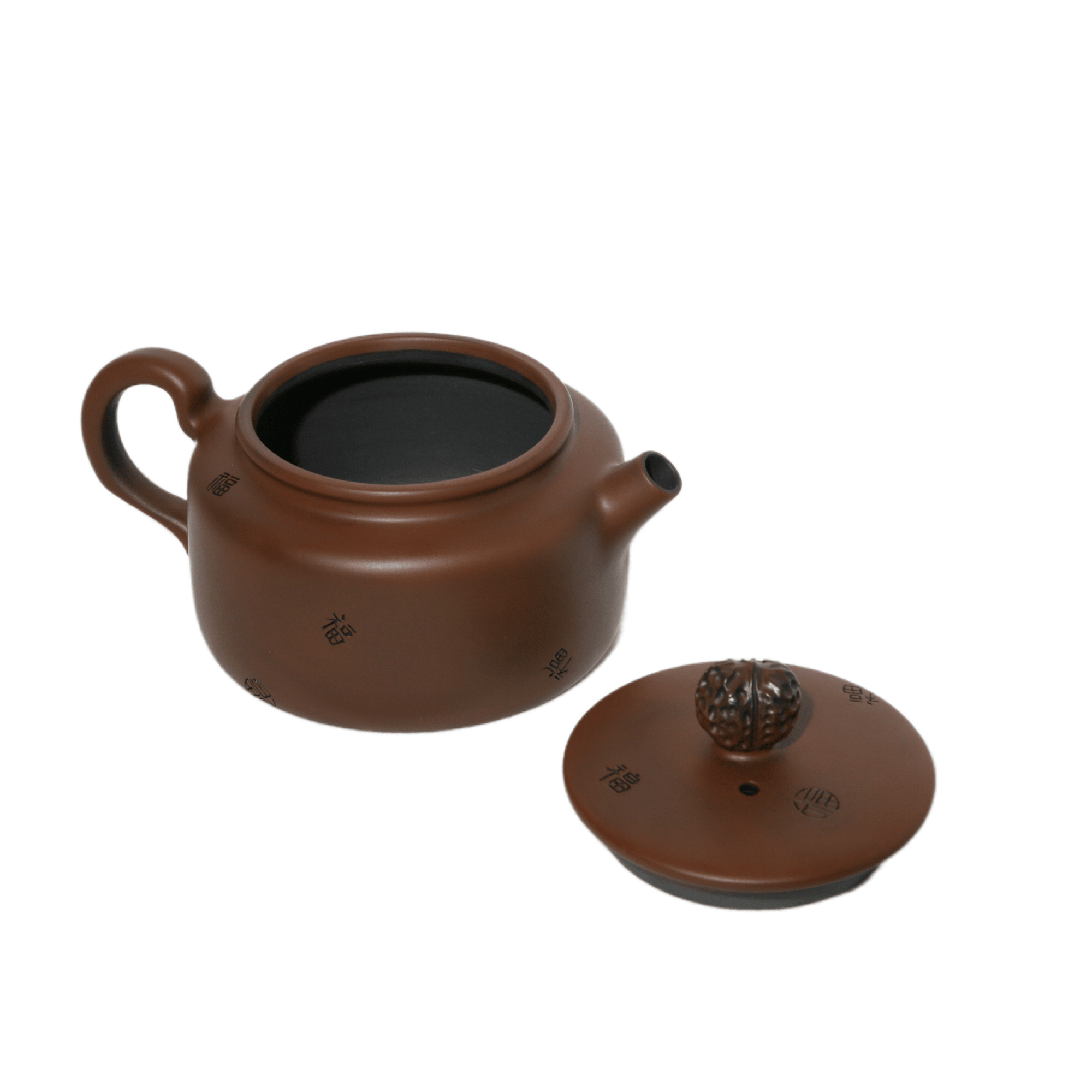
Jianshui pottery is finished without glaze. The surface is refined by hand until clay begins to hold light, revealing its mineral depth and the trace of its maker.
Discover the materialSelected pottery
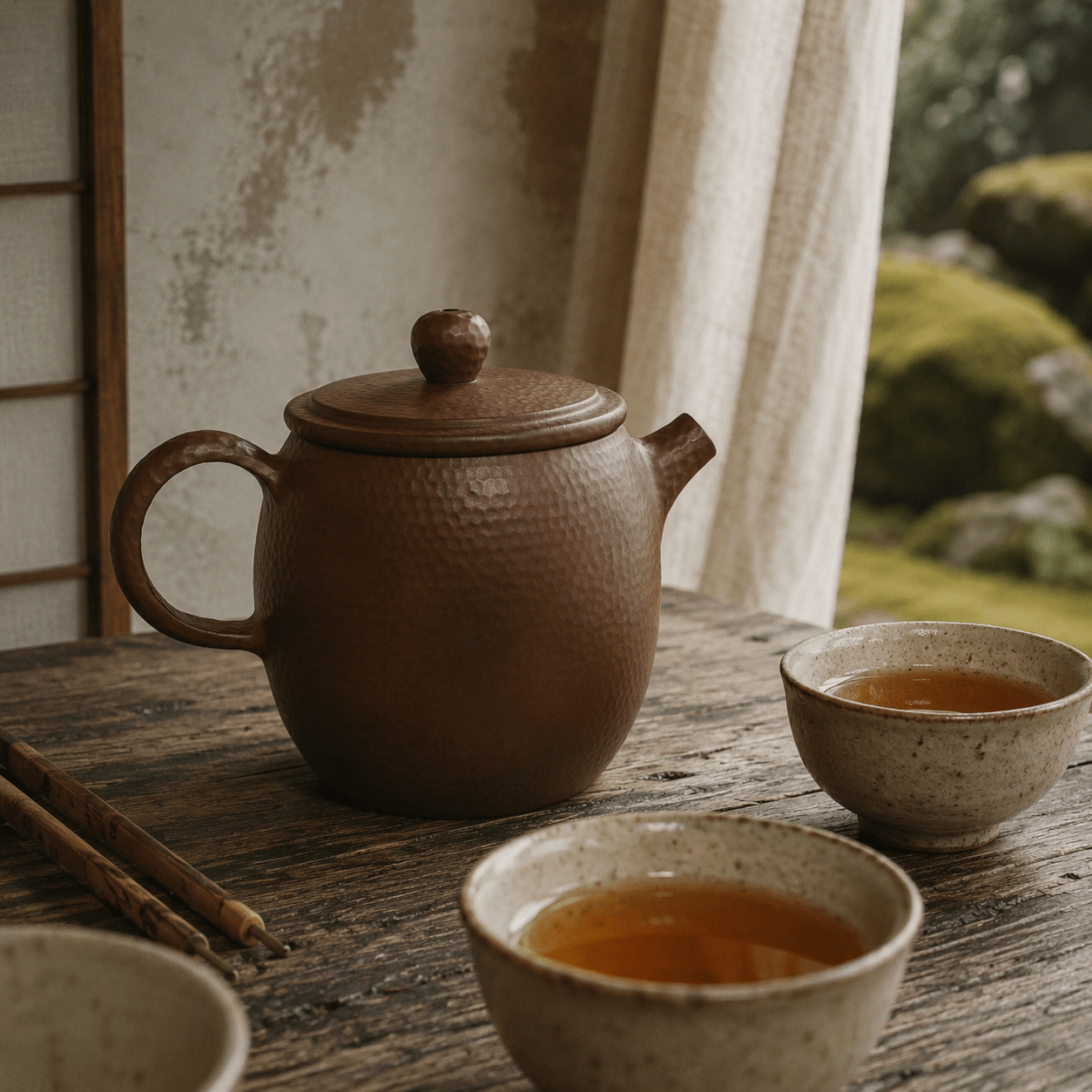
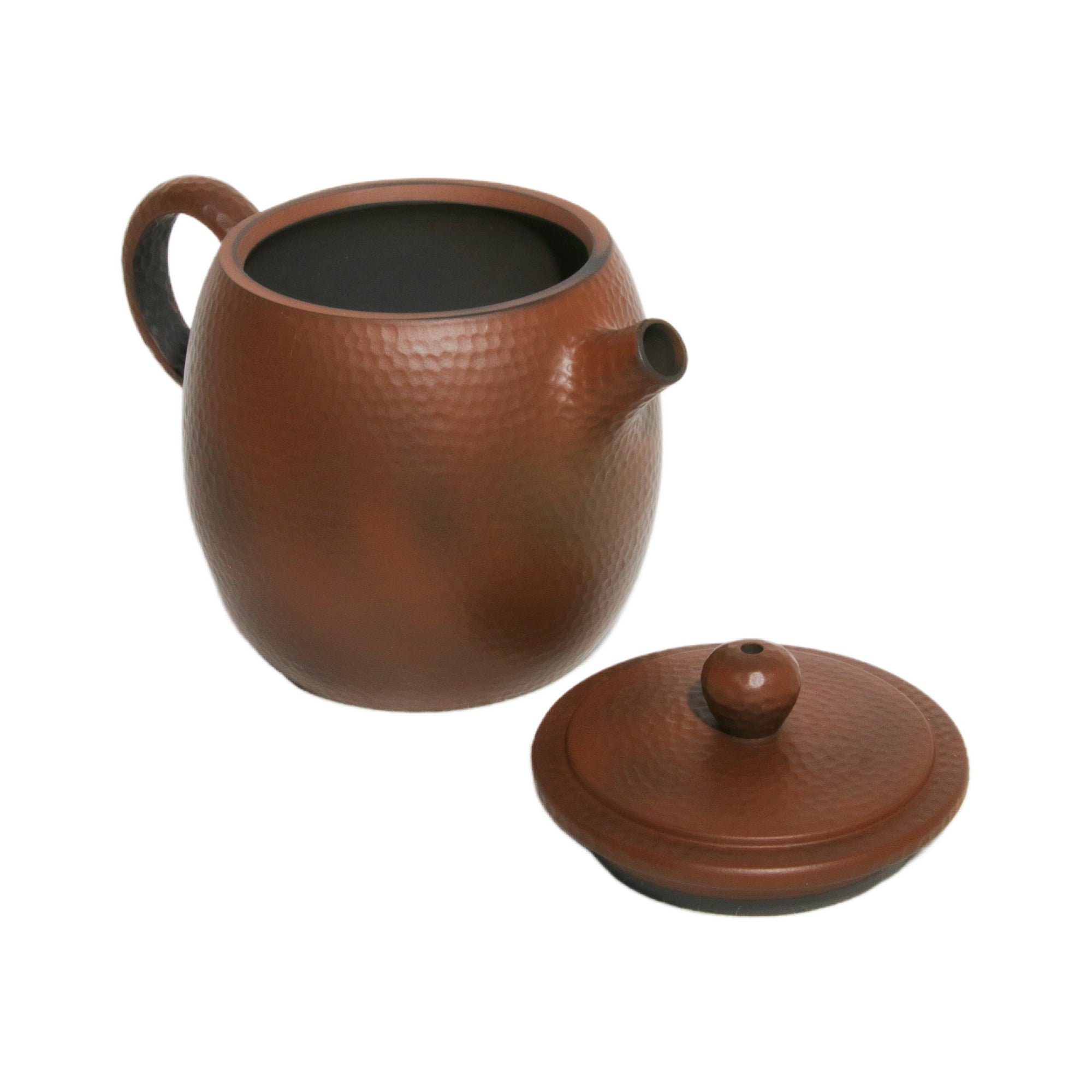
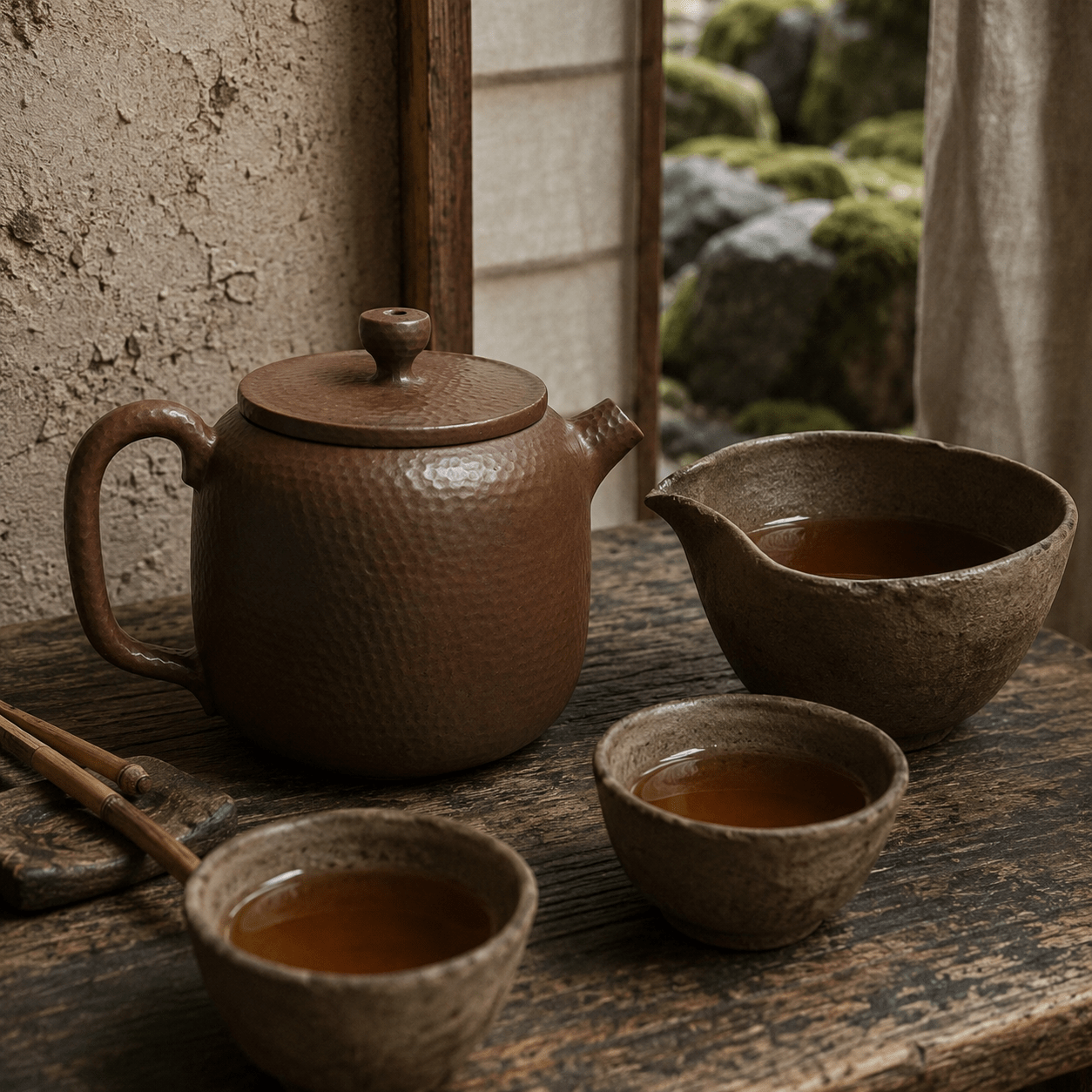
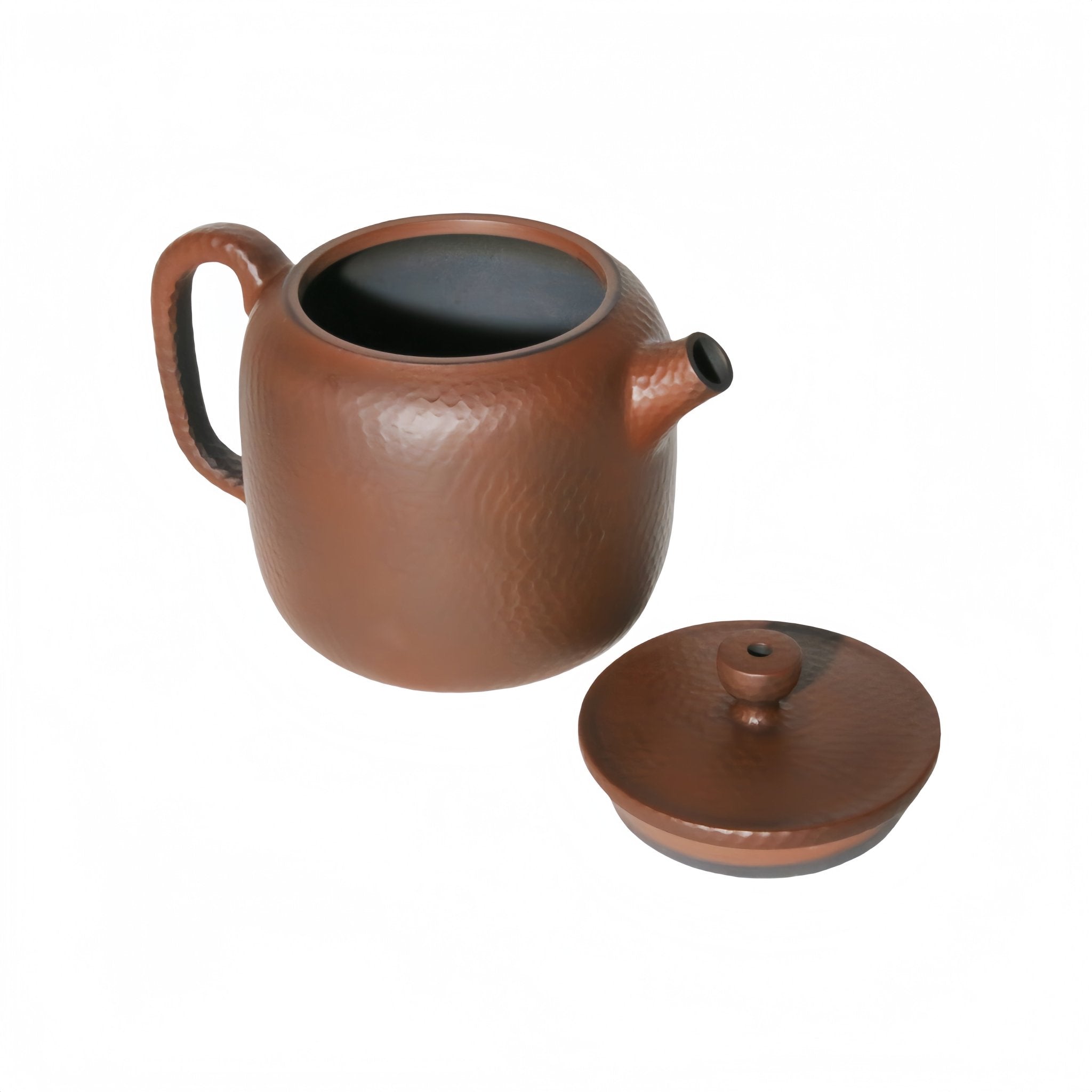
Objects of quiet presence.
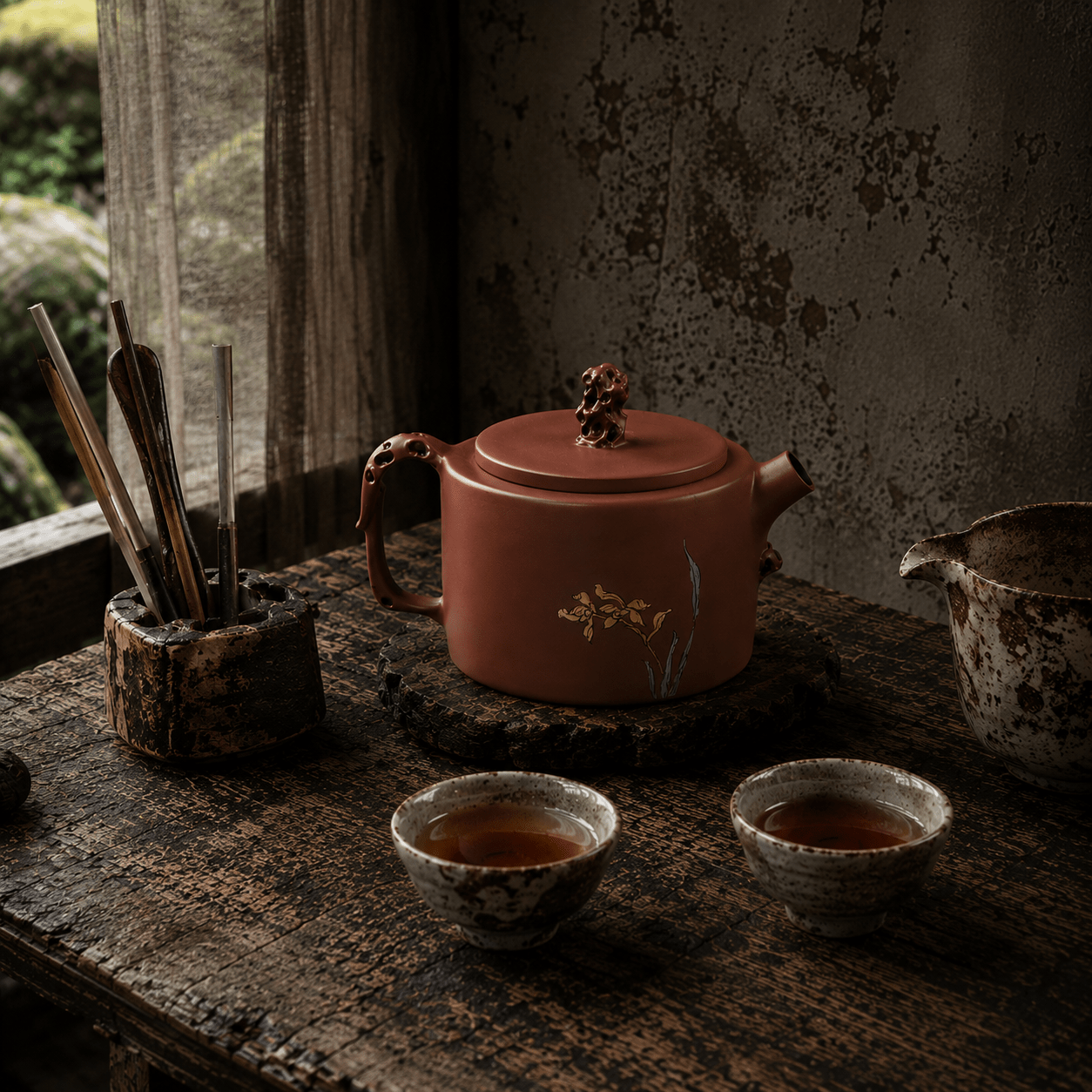
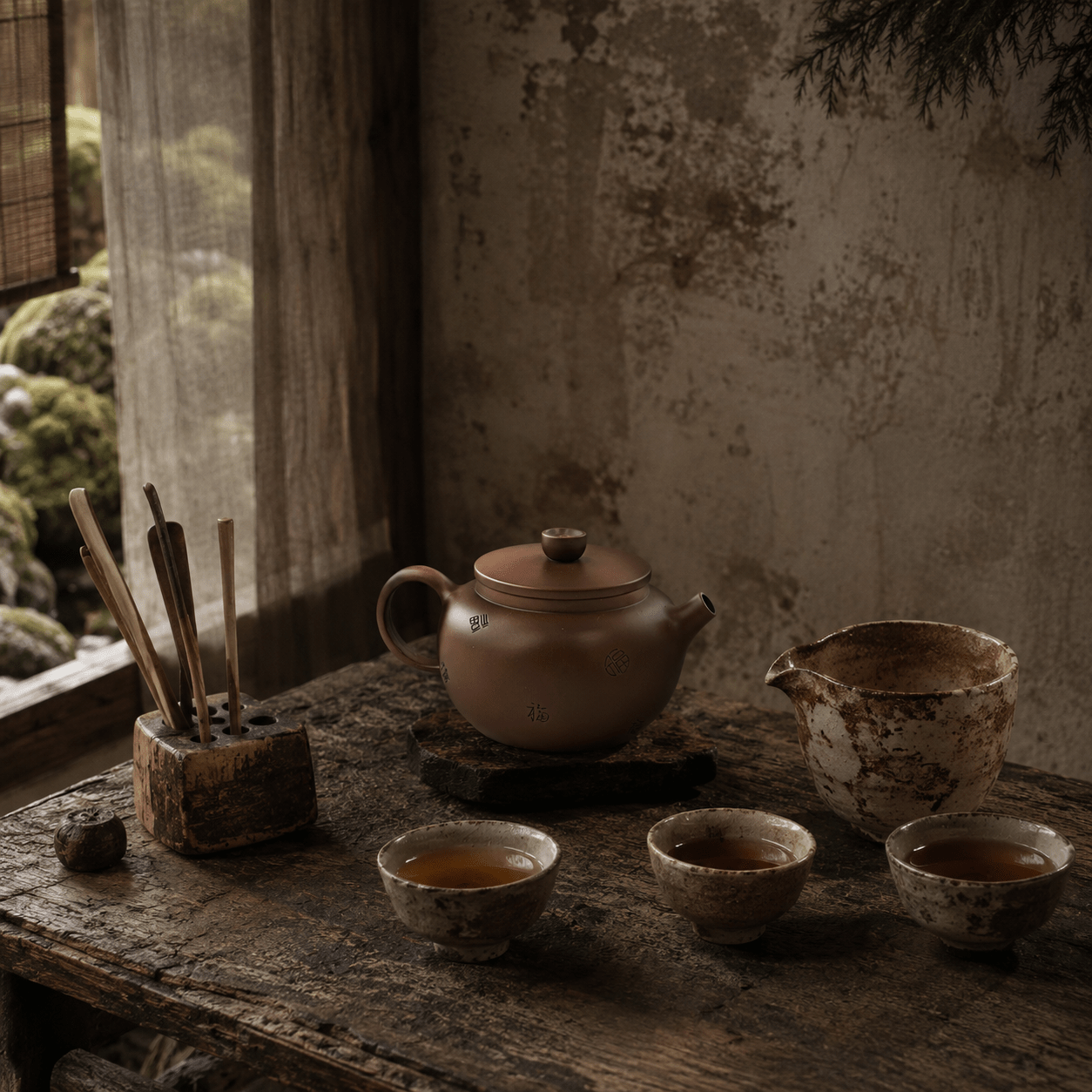
Made to be handled every day and to gather the marks of a life lived with tea.
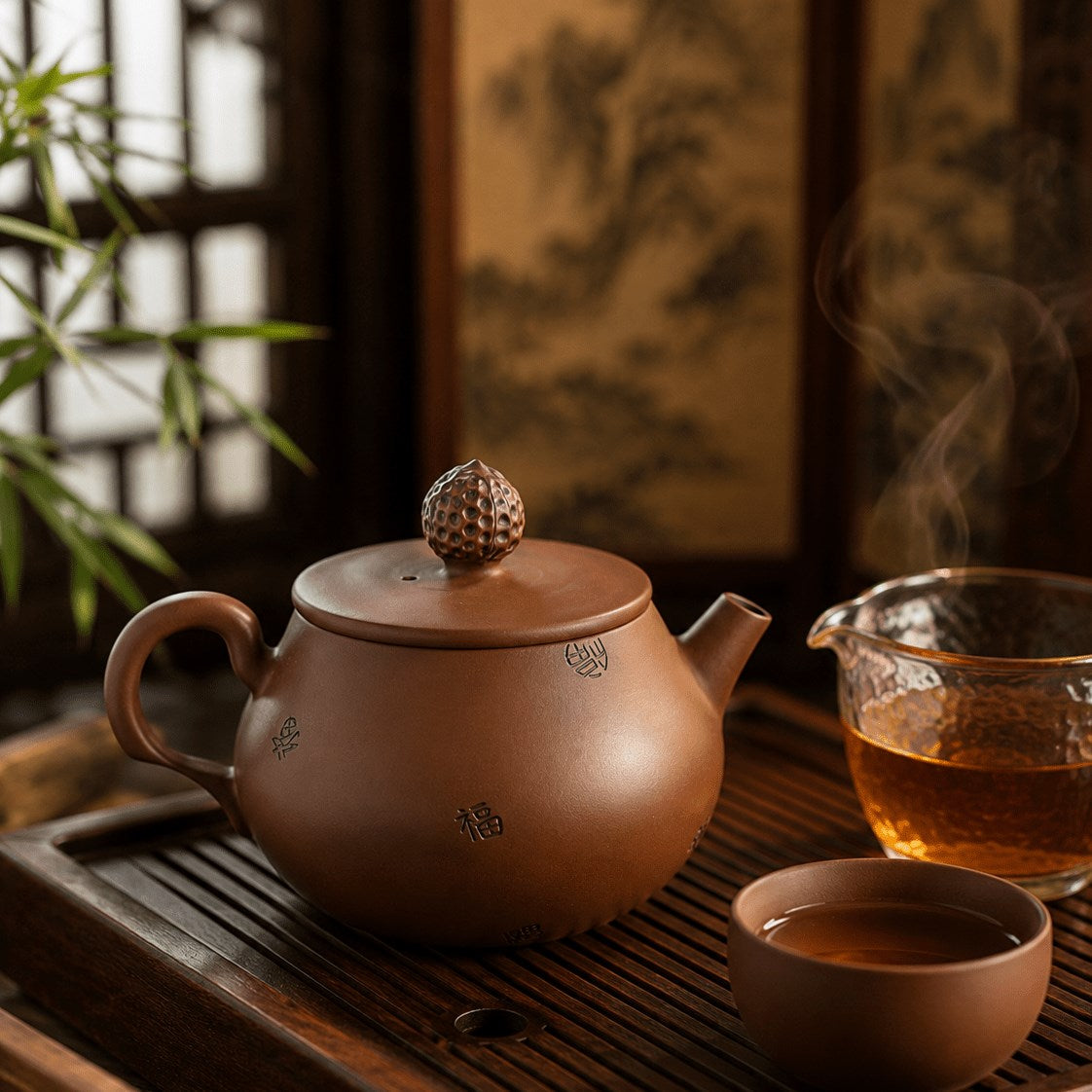
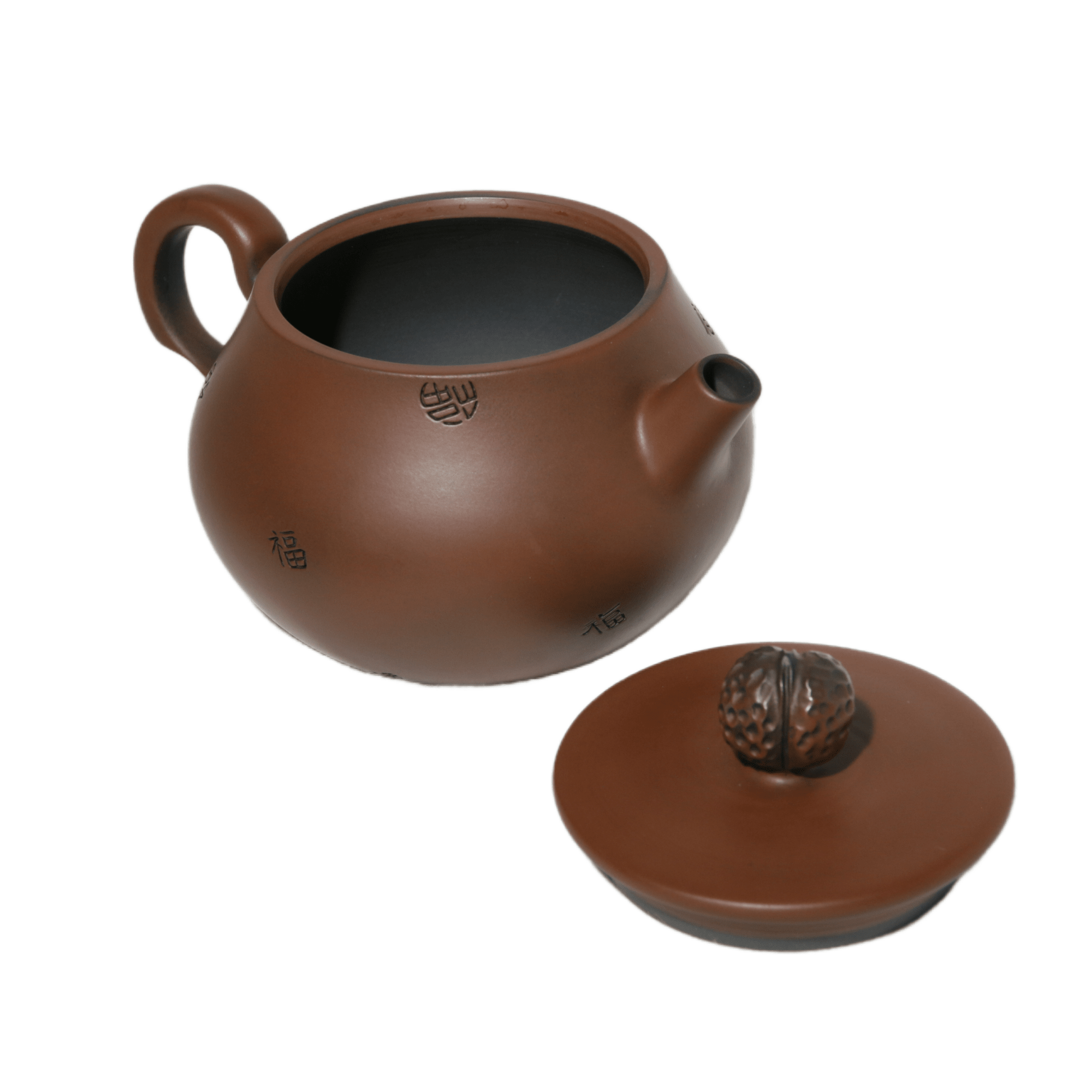
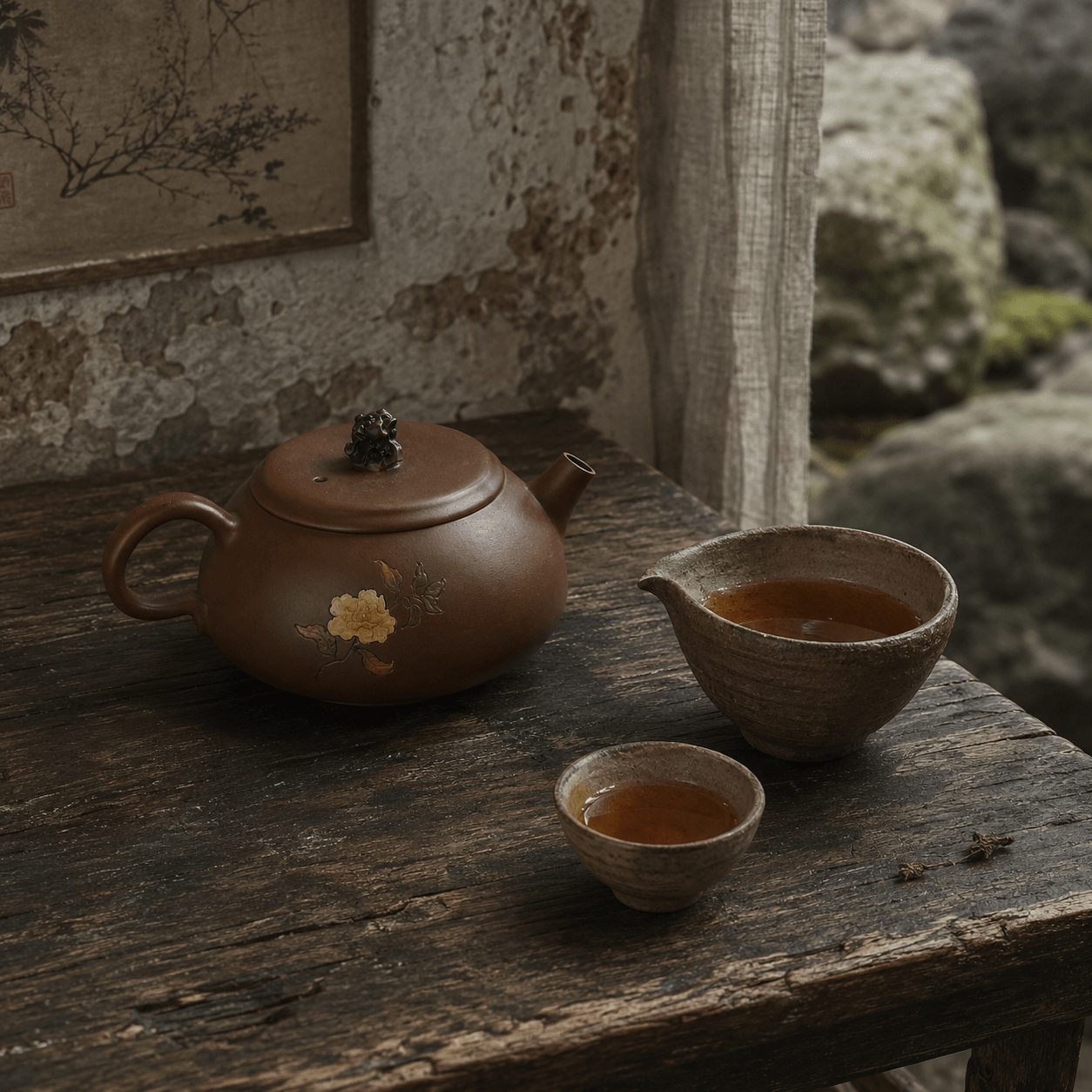
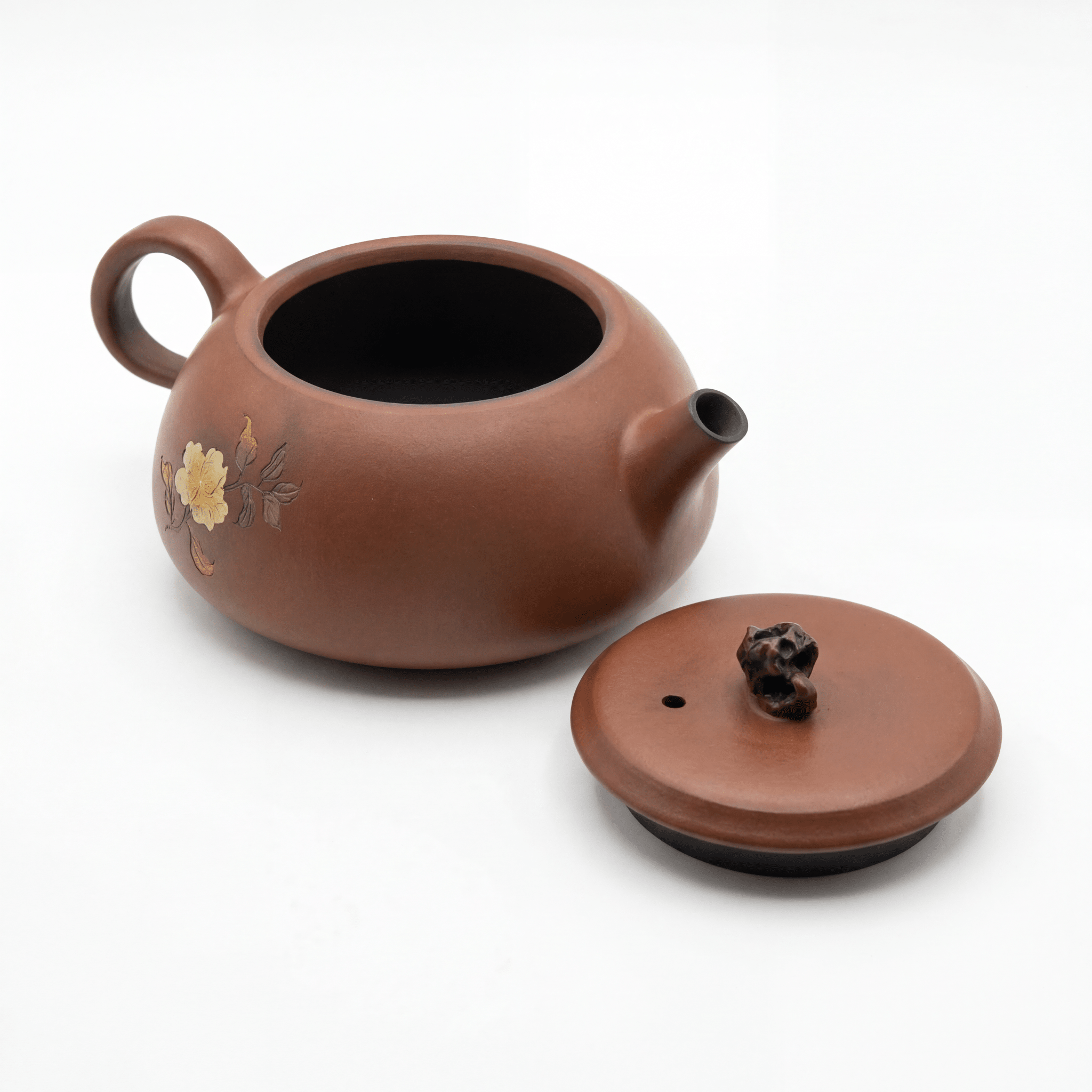
A material with memory
The hand remains visible.
Each surface records pressure, incision, fire, and the final passage of the polishing stone.

Hand-thrown
Form begins with pressure.
The clay is centred, opened, and raised by hand. Small variations are not corrected away; they are part of the object.

Carved and filled
A line becomes language.
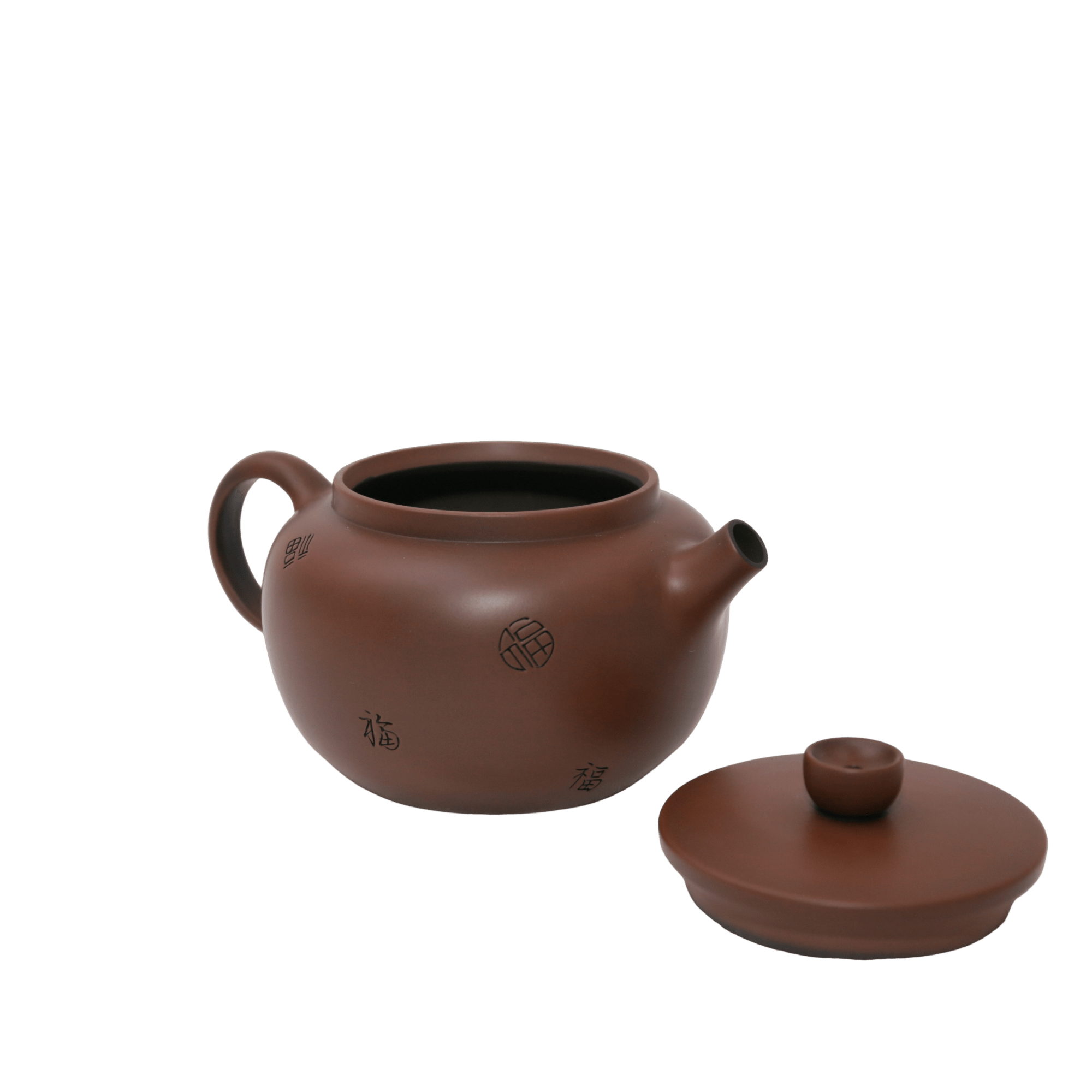
Motifs are incised into leather-hard clay, then filled with contrasting clay. The decoration belongs to the body rather than sitting on top of it.

Hand-polished
Light, without glaze.
After firing, the surface is polished repeatedly until the clay develops its own restrained lustre. No added glaze stands between material and touch.

Making note 01
Form begins with pressure.
Oriental Spirit · The Jianshui processThrowing is not the making of a silhouette. It is the continuous negotiation of speed, water, pressure, and a clay body that remembers every touch.
01 · Centring
Stillness inside rotation.
A compact mound of prepared Jianshui clay is fixed to the wheel and brought into true centre. The maker braces both hands, using the body rather than fingertips alone. Until the mass runs evenly, every later wall would inherit its imbalance.
02 · Opening
Space becomes the form.
The thumbs enter the centred mound while the outer palms resist. This paired pressure opens the first interior without tearing the base. The vessel begins not at its outside profile, but in the space the maker creates within it.
Form begins where two pressures meet.
03 · Raising
The wall rises in passes.
Clay is compressed and lifted gradually. Too much water weakens it; too little drags the surface. The final body retains minute variations in tension and thickness, evidence that the form was negotiated by hand rather than stamped into sameness.

Making note 02
A line becomes language.
Oriental Spirit · The Jianshui processIn Jianshui decoration, a line is cut into the body and rebuilt with another clay. Image and vessel become one material surface.
01 · Leather-hard clay
The right moment to cut.
The body must be firm enough to hold a clean edge and damp enough not to crumble. The artisan follows an established composition while responding to the curve of the vessel, cutting shallow controlled grooves into the clay.
02 · Contrasting clay
The empty line is filled.
A differently coloured clay is pressed into the incisions. It must reach the bottom of every groove without trapping gaps. Excess material covers the surface temporarily; the motif is not yet visible as a clean image.
Decoration does not sit on the clay. It enters it.
03 · Revealing
The surface is made whole again.
After the filling firms, the excess is carefully scraped back until the original body and inserted clay meet flush. The contrast that remains is structural rather than painted, ready to pass through firing and polishing as part of one surface.

Making note 03
Light, without glaze.
Oriental Spirit · The Jianshui processThe characteristic lustre of Jianshui pottery is not applied. It is revealed through repeated abrasion after firing.
01 · Fired surface
The kiln leaves a quiet skin.
After high-temperature firing, the body is dense but its surface remains softly matte. Small firing marks and minute irregularities must be judged before polishing begins. The objective is refinement, not the erasure of material character.
02 · Successive refinement
Each pass prepares the next.
Coarser stones address the high points first. Finer stones then reduce the previous marks. The vessel is rotated constantly so pressure remains controlled across its curves, around the handle, and beneath the spout.
Light appears because the clay is refined, not covered.
03 · Natural lustre
No glaze is added.
The completed surface can hold a deep reflection while fine clay texture remains visible. It is neither lacquered nor waxed. The lustre belongs to the fired body and shifts gently as the vessel moves in the hand.
01
Made in Jianshui
Crafted in Yunnan from local mineral-rich clay.
02
Unglazed finish
The natural surface is refined through repeated hand-polishing.
03
One of one
Subtle variations in tone and form belong to the making.
04
Worldwide delivery
Destination availability and estimates appear at checkout.
Field notes from the East
Stories held by objects.

Field note 01
Why Jianshui pottery is left unglazed
Oriental Spirit · Jianshui, YunnanIn Jianshui pottery, the surface is not a final layer added to the vessel. It is the clay body itself, refined until earth begins to hold light.
01 · The material
The clay remains visible.
Glaze can introduce colour and a glass-like finish. Jianshui purple pottery follows another path. After shaping, decorating, and firing, the vessel remains unglazed. Its tone comes from mineral-rich local clay and heat, not from a coloured coating.
This leaves shifts in tone, traces of handwork, and the fine density of a well-prepared body visible. No two pieces respond to firing and polishing in exactly the same way.
02 · The finish
Lustre made by stone.
Once fired, the surface is worked repeatedly with progressively smoother tools and stones. High points become more reflective while subtle evidence of the hand remains. The result should not resemble thick glaze or metallic lacquer. It is a restrained lustre within the clay itself.
Nothing stands between material and touch.
03 · Living with clay
A surface made for use.
Rinse the vessel with clean water after use and allow it to dry fully. Avoid dishwashers, strongly scented detergents, abrasive pads, and sudden temperature changes. With regular handling, the surface may gradually develop a softer, more personal character: a quiet record of water, tea, and time.

Field note 02
From five clays to one body
Oriental Spirit · Jianshui, YunnanBefore a Jianshui vessel reaches the wheel, its character has already begun in the selection, refinement, and balancing of clay.
01 · A local palette
Colour is a language, not a formula.
Jianshui is associated with mineral-rich clays in natural tones often described as red, yellow, white, green-grey, and purple-brown. “Five-colour clay” describes this palette; it is not one universal recipe used in equal proportions by every workshop.
02 · Refinement
Earth becomes workable.
Raw material is cleaned and refined before forming. Crushing, soaking, settling, filtering, and ageing help remove unwanted particles and distribute moisture evenly. The clay must hold a precise edge, respond to the hand, and remain stable through drying and firing.
The finished vessel begins long before the wheel turns.
03 · Balance
One body, many decisions.
Colour is only one consideration. Particle size, plasticity, shrinkage, and response to heat all matter. Once prepared, the clay is wedged into an even body. On the wheel, this invisible labour becomes control: the form centres cleanly, rises without tearing, and retains the maker's pressure.

Field note 03
A vessel for the daily ritual
Oriental Spirit · Jianshui, YunnanA handmade teapot does not need a ceremonial room to become meaningful. Its place can be a kitchen counter, a work table, or a quiet interval at the end of a long day.
01 · Begin with the hand
Choose by touch.
The handle should sit securely in your grip, the lid should feel settled, and the pour should be controlled. Capacity matters more than spectacle: a smaller pot suits concentrated repeated infusions, while a larger vessel may better serve a shared table.
02 · Repetition
Let use create the rhythm.
Warm the vessel, add leaf, pour water, and allow the infusion the time it needs. These gestures are simple, but repetition makes them precise. The purpose of ritual is not performance. It is attention.
An object made slowly can belong naturally to contemporary life.
03 · Time
An object becomes familiar.
Minute variations in form, tone, and polishing distinguish one handmade piece from another. Through use, the vessel gathers associations with the moments in which it was held. A daily ritual creates a brief, repeatable interval in which material, water, and attention meet.
Care, craft, and delivery
Questions, considered.
Essential information for choosing and living with a handmade vessel.
What is Jianshui Purple Pottery?
Jianshui Purple Pottery is a traditional ceramic practice from Jianshui, Yunnan. Its vessels are known for locally sourced clay, hand-formed bodies, carved-and-filled decoration, high-temperature firing, and an unglazed polished surface.
Why is the surface unglazed?
The finished surface comes from the clay itself. After firing, each piece is polished repeatedly to reveal a restrained natural lustre without an added glaze.
Will my piece look exactly like the photographs?
Each vessel is made and finished by hand. Small differences in tone, polishing marks, and form are expected and are part of the character of the work.
Where do you ship?
Sold by Oriental Spirit (Asia Pacific) Limited (Hong Kong).
Pottery is made in Jianshui, Yunnan, and packed in Dongguan, Guangdong.
Delivery estimates and any duties are shown at checkout.
How should I care for my pottery?
Rinse with clean water after use and allow the vessel to dry fully. Avoid dishwashers, abrasive cleaners, and sudden temperature changes.